
Add a comment
Can an Ensemble be Charismatic?
‹-- PreviousNext --›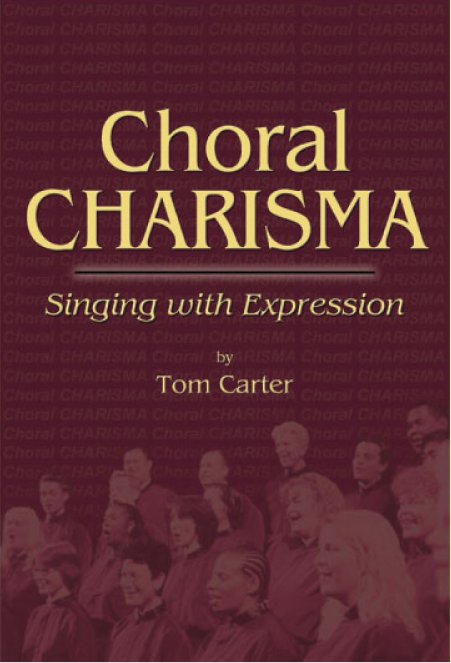 I’ve been thinking quite a lot recently about Tom Carter’s book Choral Charisma, and in particular about the accuracy of its title. For those who don’t know it, it’s practical guide to helping choirs (especially school- or college-age and amateur choirs) sing with greater expression, communicative power, and personal fulfilment. It is strongly and usefully informed by Tom’s background in drama as well as music, and is much to be recommended. The opening chapter on psychological safety in the rehearsal room is particularly insightful.
So, you get the idea: I like his approach.
Having said that, I’m not convinced that what he’s writing about is actually charisma. Indeed, I noticed recently that the word only appears in the title, not anywhere in the body of the book. The core elements he is concerned with – personal authenticity, openness of communication, emotional connectedness – are all features commonly associated with charismatic people of course. But there is a key ingredient missing here.
Charisma is a critical quality. Max Weber, whose analysis of charismatic authority is still the starting point for both sociological and leadership/management studies of the phenomenon, identified charisma as a form of leadership that stands outside of established power structures. The charismatic galvanises her followers not just through the articulation of vision, but by presenting that vision as the answer to some kind of crisis or problem in their lives.
Now, Tom Carter himself is a charismatic writer. (I’ve not yet seen him in action, but I should imagine he is also a charismatic coach.) He has a clear vision that promises its adherents rewards in terms of increased meaning, and he propounds it as a direct critique of choral methods that place control over emotion.
But the choral singers he helps are clearly in the role of disciples in this drama. They get the benefit of a deeper and more humane musical experience for themselves and their audiences, but they are not themselves necessarily galvanising others to action.
This in turn has got me thinking in more general terms about whether a collective of people can act as a charismatic agent. Charismatic encounters are usually understood to occur when a social group coheres around the vision of a single leader whom they experience as possessing extraordinary powers in some dimension or other. The idea of a group of people performing this role as lynch-pin of meaning is utterly alien to the literature on leadership.
But in music we are quite accustomed to thinking about groups of people in terms of a single identity: The Beatles, The Brodsky Quartet, Naturally 7. This is because we experience the musical work in performance as a single aggregate persona with its own story and point of view: Beethoven’s 2nd Symphony, ‘When I’m Sixty-Four’. It makes sense to talk about the Beatles having changed the course of music, and the sense of solidarity or communion they inspired in their fans likewise points to their acting corporately as that kind of charismatic agent.
So I think it may be possible for an ensemble to take on this function, but I suspect it is relatively rare. More often, it is a particular individual within the ensemble that galvanises its members into committing to a particular artistic vision: the Dave Brubeck Quartet, the Robert Shaw Chorale, the Swingle Singers. (Thinking about it, the Beatles played under names that suggest this kind of dynamic in their early days: "Johnny and the Moondogs", "Long John and The Beetles". Hmm.)
And it is perhaps in this sense that Tom’s book title makes more sense. It’s not so much that the choir is acting as a charismatic performer, but that the singers are the participants in a charismatic encounter, sparked by the vision of a more expressive and emotionally meaningful relationship with music. It isn’t a book about how to make the choir charismatic, but how to get them to experience their director as charismatic.


You may also like ...
|
Node 1,093
Weight = 5. Linked from What Musicians can Learn from Steve Jobs about Charisma (4), One tag in common [237 posts have this] Charisma (1) 
|
Node 1,158
Weight = 3. Common link to en.wikipedia.org/wiki/Max_Weber (2), One tag in common [237 posts have this] Charisma (1)
|
Node 1,290
Weight = 2. Common link to www.choralcharisma.com/ (2) 
|
Node 1,152
Weight = 2. Common link to www.choralcharisma.com/ (2)
|
