
Add a comment
Performing at Trigger Point
‹-- PreviousNext --›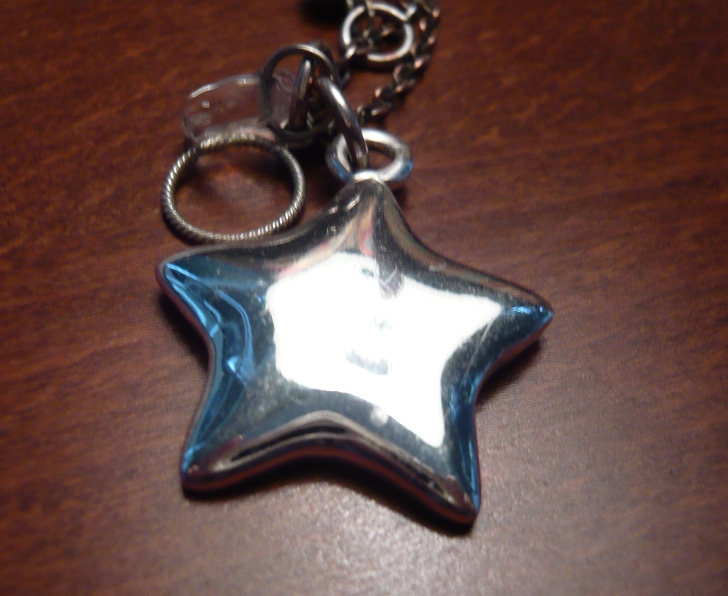 Magenta's primary triggerOne of the techniques from sports psychology that Karen O’Connor shared in her Performing On Your Mind workshop was the use of triggers, or cues. For me, this was one of those lovely moments when a concept crystallised out aspects of my own praxis. By naming the tool, it became possible to analyse it - and also to see ways in which I can apply it more tactically.
(Which is, if you think about it, what a coach is doing a lot of the time anyway: making things that a performers is experiencing perceptually available, and thus also conceptually available. Actually, that’s the function of music analysis too - I hadn’t spotted that parallel until I started this paragraph.)
So, the point of a trigger is to identify a symbol or word that encapsulates the performer’s primary goal or value for a performance as a means to keep them focused on what the point of it is in the face of the internal and external distractions offered by the performance situation. The content of the triggers arose from the coaching process, in answer to such questions as ‘What kind of performance would you like to give?’, or ‘How would you describe this piece to someone who had never heard it?’ That is, they are values and musical ideas important to the performer, not imposed by the coach.
The examples Karen gave included words written on hands (‘bouncy’, ‘enjoy’), symbols written on a slip of paper to be kept in a pocket, and objects that held specific personal associations for the performer. There were two key elements to them all, though:
- Brevity - a single word or image summarised the essence of the idea, rather than a discursive outline of it.
- Presence - the token of the idea physically comes into the performance arena with the performer.
The trigger is thus a means to maintain the principle of ‘focusing on what needs to be done, not what is to be avoided.’
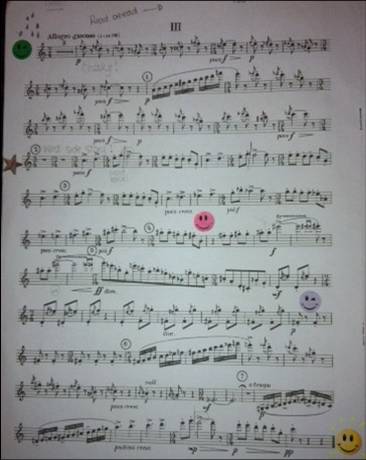 Positive triggersThese triggers are global, summarising entire pieces or programmes. Karen also shared an example of how a student used more localised triggers within a piece, on the sheet music from she was to perform. At the points in the piece where the performer might have been at risk of feeling anxious about ‘difficult bits’, she placed images of smiley faces to remind herself to relax and enjoy the music.
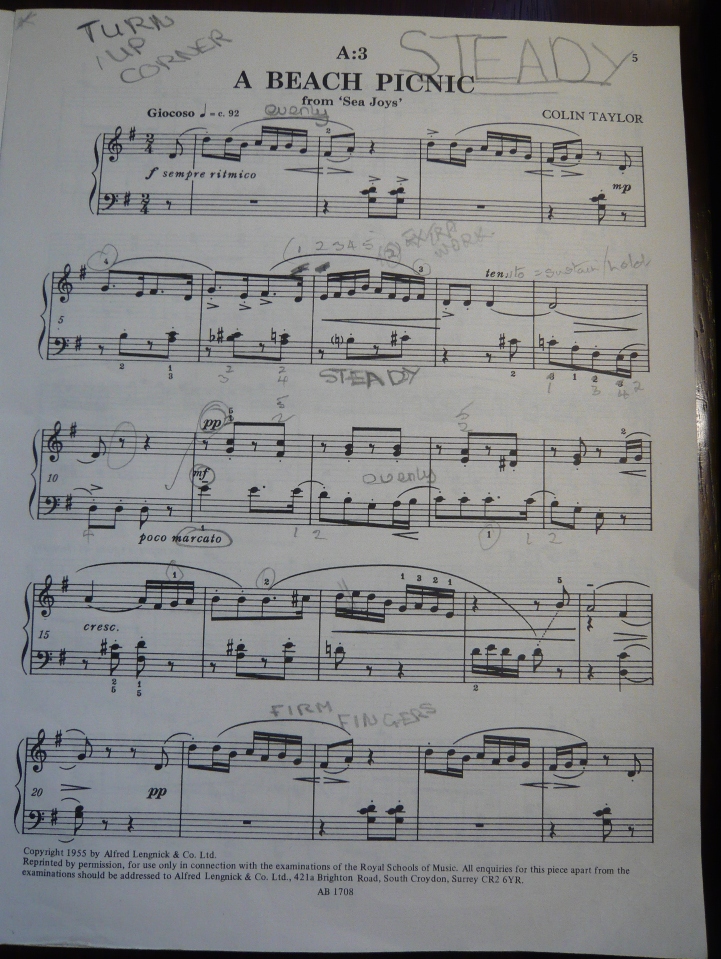 Negative triggersThis may seem like such a simple thing, it is hardly worth remarking on. But I had a sudden flashback to some music I had performed from in childhood which was covered in annotations that admonished me to avoid errors. Some of these were from my piano teacher - mostly fingering and reminders of aspects of the score I was presumably overlooking - but the more didactic and more heavily underscored instructions are in the handwriting of my 10-year-old self.
It was around this time that I have my earliest memories of the crippling performance anxiety that blighted my teens, and which I have spent my adult life wishing to prevent or cure in others. Looking back at this music, it’s quite evident what the problem was. I don’t recall ever having noticed before the words, ‘From Sea Joys’. If my 10-year-old self had spent a bit more time thinking about joy, and a bit less beating myself up over imperfect technical control, the technique, I suspect, would have been less of an up-hill struggle.


You may also like ...
|
Node 1,599
Weight = 5. Linked from On Editorial Oppression (4), One tag in common [549 posts have this] Performing (1) 
|
Node 1,612
Weight = 5. Linked from Repurposing Parking (4), One tag in common [549 posts have this] Performing (1) 
|
Node 1,763
Weight = 3. Three tags in common [5 posts have this] Coaching, Excellence, Performing (3) 
|
Node 2,023
Weight = 3. Three tags in common [5 posts have this] Coaching, Excellence, Performing (3) 
|
